
SMILE Laser Eye Surgery: The Minimally Invasive Alternative to LASIK
SMILE (Small Incision Lenticule Extraction) offers flapless laser vision correction with faster nerve recovery. Learn how it compares to LASIK and who benefits most.
SMILE — Small Incision Lenticule Extraction — represents the latest evolution in laser vision correction. Approved by NICE and performed worldwide since 2012, SMILE corrects myopia and astigmatism through a keyhole incision just 2–4mm wide, without creating the corneal flap required in LASIK. This fundamental difference gives SMILE distinct advantages for certain patients.
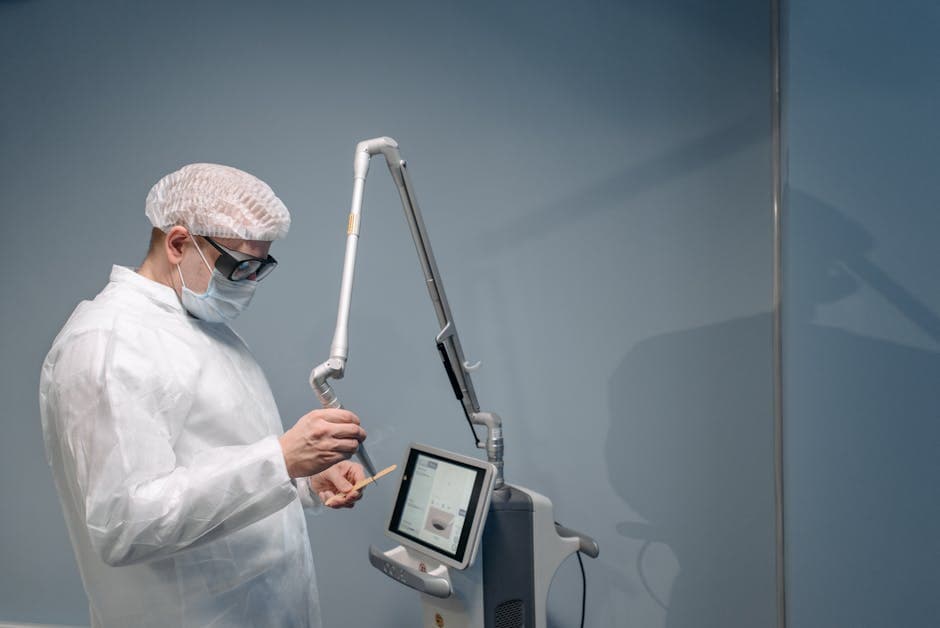
During the procedure, a Carl Zeiss VisuMax femtosecond laser creates a thin disc of corneal tissue (called a lenticule) within the intact cornea. Miss Khanam then removes this lenticule through a tiny peripheral incision, changing the corneal curvature and correcting the refractive error. The entire process takes approximately 25 seconds of laser time per eye.
The key advantage of SMILE is corneal biomechanical preservation. Because roughly 80% of the anterior corneal nerves remain intact — compared to the significant nerve disruption caused by a LASIK flap — patients typically experience less post-operative dry eye. A 2023 meta-analysis published in the Journal of Cataract and Refractive Surgery confirmed that dry eye symptoms at three months were significantly lower in SMILE patients compared to LASIK.
SMILE is currently approved for myopia up to -10.00 dioptres and astigmatism up to -5.00 dioptres. It is not yet licensed for hyperopia (long-sightedness), so patients with this refractive error will need to consider LASIK or PRK instead. Corneal thickness requirements are similar to LASIK, though the absence of a flap means slightly thinner corneas may qualify.
Recovery after SMILE follows a slightly different trajectory to LASIK. While most patients achieve functional vision within 24 to 48 hours, the visual sharpening process can take a few days longer than LASIK as the corneal surface remodels without a repositioned flap. By one week, the vast majority of patients are seeing 20/20 or better.
One consideration is that SMILE is a newer technique with a shorter evidence base than LASIK, which has over 25 years of long-term outcome data. However, five-year follow-up studies show excellent refractive stability, with fewer than 2% of patients requiring an enhancement procedure.
At K Vision Centre, Miss Tina Khanam will assess your corneal topography, refraction stability, pupil size, and tear film quality to determine whether SMILE, LASIK, or PRK offers the best outcome for your specific eyes. Not every patient is a candidate for every procedure — and that honest assessment is what defines excellent surgical care.
SMILE laser eye surgery at K Vision Centre is available from £1,495 per eye. Your consultation fee is fully redeemable against treatment, and all follow-up appointments are included. Book your assessment at Harley Street, Spire Gatwick Park, or Spire St Anthony's.
Written by
Miss Tina Khanam
Consultant Ophthalmic Surgeon at K Vision Centre
Learn more about Miss Tina KhanamHave Questions About This Topic?
Book a consultation with Miss Tina Khanam to discuss your concerns and explore your options.
Speak With Miss KhanamRelated Articles
Continue exploring our expert insights on eye health

Overcoming Fears of Vision Correction Surgery
Learn about common fears related to vision correction surgery and how modern techniques ensure a safe and comfortable experience.

Laser Eye Surgery: A Game Changer for Contact Lens Wearers
For contact lens users, laser eye surgery offers lasting freedom and reduced risks. Learn about its transformative lifestyle benefits.
Laser Eye Surgery Kingston & London: Post‑Op Benefits
Considering laser eye surgery in Kingston or London? Learn the real post‑operative benefits—clearer vision, everyday convenience, and life without glasses or contacts—guided by our consultant-led team at K Vision Centre.