
Eyelid surgery
Droopy Eyelid Surgery in London & Surrey
Heavy, hooded or drooping upper eyelids assessed by Miss Tina Khanam FRCOphth, Consultant Ophthalmic Surgeon, at Harley Street and in Surrey. She finds out what is causing the droop before recommending any treatment.
In short
What Is Droopy Eyelid Surgery?
Droopy eyelid surgery lifts an upper eyelid that has dropped. The right operation depends on the cause: upper lid blepharoplasty removes excess, overhanging skin (dermatochalasis), while ptosis repair tightens the muscle that raises the lid. An eye examination tells the two apart, and many people have a little of both.
- Treats
- Excess, overhanging eyelid skin (dermatochalasis)
- What is done
- Skin, and sometimes a little fat, removed through the lid crease
- Anaesthetic
- Usually local, as a day case
- With Miss Khanam
- Performed by her, from £3,000 per eyelid
Blepharoplasty
- Treats
- A lid edge that sits too low (ptosis)
- What is done
- The lifting muscle or its tendon tightened or reattached
- Anaesthetic
- Usually local, as a day case
- With Miss Khanam
- Assessed by her, with referral where appropriate
Ptosis repair
Causes
What Causes Droopy Eyelids?
Most droopy eyelids in adults have one of three causes, and they can occur together. Telling them apart matters, because each needs a different treatment.
Excess eyelid skin (dermatochalasis)
Often called hooded eyelids
With age the skin of the upper eyelid stretches and loses elasticity, and the fat behind it can push forward. The extra skin folds over the lid crease and, in some people, rests on the lashes or hangs into the upper part of what you can see.
The eyelid margin itself is usually in the normal position. This is the type that upper lid blepharoplasty treats.
A low eyelid margin (ptosis)
Sometimes called blepharoptosis
In ptosis the edge of the eyelid sits lower than it should, because the muscle that lifts the lid, or the tendon that attaches it, has stretched or weakened. In adults this is most often age-related, and it is also linked to long-term contact lens wear and, occasionally, to previous eye surgery.
Removing skin does not lift a ptotic eyelid, which is why the cause is checked before any operation is planned.
A low eyebrow (brow ptosis)
The brow pushes the lid skin down
If the eyebrow has dropped, it can crowd the upper eyelid and make it look heavier than it is. Treating only the eyelid in this situation can lower the brow further, so Miss Khanam checks the brow position as part of the assessment and will tell you if the brow, rather than the lid, is the main issue.
Your consultation
How Miss Khanam Assesses a Droopy Eyelid
You see Miss Khanam herself at every appointment. The consultation is where the cause is found, so it comes before any decision about surgery.
- Your history. How long the droop has been there, whether it varies through the day, contact lens use, previous eye surgery, dry eye symptoms and any medicines that thin the blood.
- Eyelid measurements. The height of the lid margin above the centre of the pupil, how well the lifting muscle works, the lid crease, the amount of excess skin and the position of the brow.
- A full eye examination. Including the front surface of the eye and the tear film, because dry eye needs to be found and treated before eyelid surgery, not after.
- A visual field test, where relevant. If the eyelid is affecting your vision, a field test measures how much of your upper vision it blocks. Insurers usually ask for this before they consider funding surgery.
- A clear recommendation. Whether surgery is likely to help, which operation, what it can and cannot change, the risks, the fee, and the alternatives, including leaving things as they are.
Treatment
Treatment Options for Droopy Eyelids
Upper eyelid blepharoplasty
Blepharoplasty removes the excess skin, and sometimes a small amount of fat, through an incision hidden in the natural crease of the upper eyelid. It is usually done as a day case under local anaesthetic and typically takes 45 to 60 minutes. The aim is to take away the overhanging fold while keeping enough skin for the eyes to close comfortably.
It can be done because the skin is blocking your vision (functional blepharoplasty) or because of how your eyelids look (cosmetic blepharoplasty). Cosmetic eyelid surgery is offered to adults only, and you will be given time to think between your consultation and agreeing to surgery. See the eyelid surgery page for more on the operation itself.
Ptosis repair
When the lid edge itself sits too low, removing skin will not raise it. Ptosis repair works on the muscle that lifts the eyelid, tightening or reattaching it, usually from the front through the lid crease or from the inside of the eyelid. If your droop is caused by ptosis, Miss Khanam will explain what that means for you and, if surgery is the right step, recommend the most suitable surgeon. For some types of ptosis that is an oculoplastic (eyelid specialist) surgeon, and she will refer you.
Choosing not to have surgery
A droopy eyelid that is not affecting your vision or comfort does not have to be treated. If your eyes feel gritty or tired, treating dry eye or blepharitis may help, and for many people the right plan is to keep an eye on things. There is no cream, drop or injection that removes excess eyelid skin.
Speak with Miss Khanam about your eyelids
Leave your details and Miss Khanam will arrange a time to talk about your eyelids and whether treatment would help.
Recovery
Recovery After Upper Eyelid Surgery
Everyone heals at a different pace. This is a typical timeline after upper lid blepharoplasty; Miss Khanam will give you written aftercare instructions for your own surgery.
- The day of surgery. Upper lid blepharoplasty is usually a day case under local anaesthetic and typically takes 45 to 60 minutes. You will need someone to take you home.
- Days 1 to 3. Bruising and swelling are expected. Cold compresses and sleeping with your head raised help. Your eyes may feel tight or gritty, and you may be asked to use lubricating drops and an antibiotic ointment.
- Week 1. Swelling starts to settle. Stitches are usually removed at around 5 to 7 days. Many people return to desk work in 7 to 10 days, depending on their job and how visible the bruising is.
- Weeks 2 to 4. Most bruising has faded. Avoid heavy lifting, swimming and eye make-up until you are told it is safe.
- Months 1 to 3. The scar in the eyelid crease continues to soften and fade. It can take several months for the final result to be clear.
Risks
Risks of Droopy Eyelid Surgery
All surgery carries risk. Miss Khanam goes through these with you, and how they apply to you, before you decide.
- Bruising and swelling. Expected after surgery and usually settles over one to two weeks.
- Dry, gritty or watery eyes. Common in the first weeks. Existing dry eye is treated beforehand and lubricating drops help.
- Asymmetry. Eyelids are rarely identical before surgery, and small differences can remain or appear afterwards. Occasionally a further procedure is needed.
- Under- or over-correction. Too little skin removed may leave some heaviness; too much can make the eyelids hard to close fully, which can dry the eye. Careful measurement reduces this risk.
- Scarring. The incision sits in the natural lid crease and usually fades well, but scars vary from person to person.
- Infection or a wound problem. Uncommon. An antibiotic ointment is usually prescribed.
- Bleeding behind the eye. Rare, but serious because it can affect vision. You will be told which symptoms need urgent attention after surgery.
Fees
Cost: Private, Insurance and NHS
The surgeon's fee for upper lid blepharoplasty with Miss Khanam is £3,000 per eyelid. Hospital and anaesthetic charges, and any tests, may be extra. You will get a written quote after your consultation, before you decide anything, and you can spread the cost.
Health insurance
Some insurers cover eyelid surgery when the eyelid is shown to block your vision, usually with visual field test results and a GP referral. Cosmetic surgery is not normally covered, so check your policy before your consultation.
NHS treatment
The NHS usually funds eyelid surgery only when it meets local criteria, which generally means the eyelid is affecting your vision. Surgery for appearance alone is not normally available on the NHS, and the criteria vary between areas. Your GP or optometrist can tell you whether a referral is possible.
Your surgeon
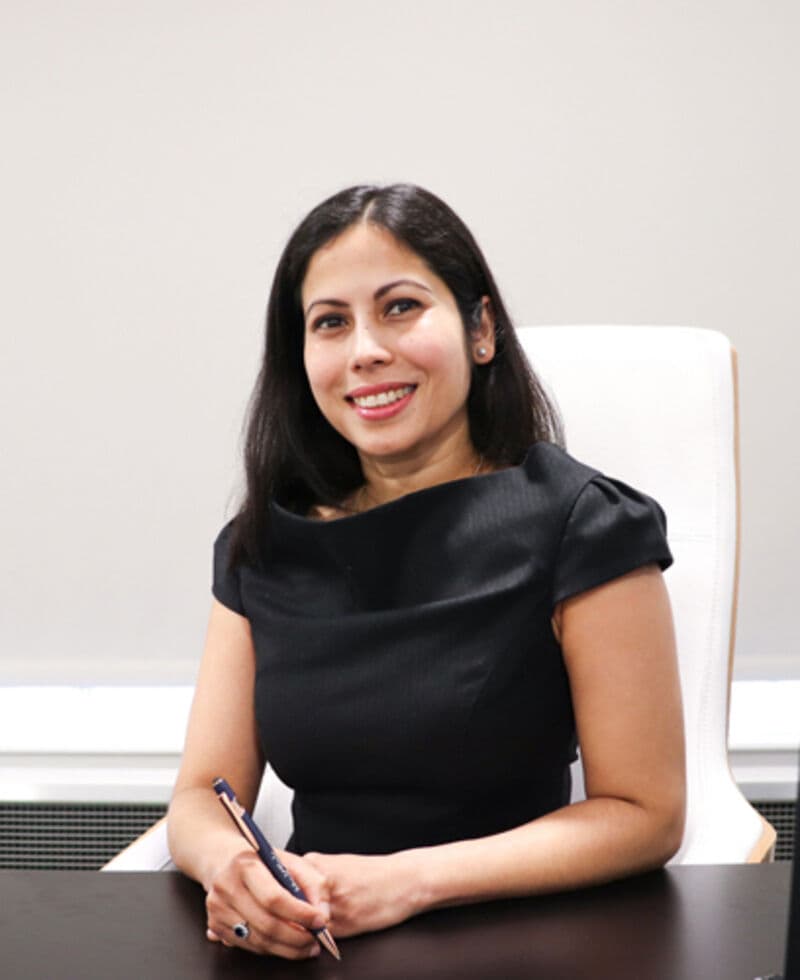
About Miss Tina Khanam
Miss Tina Khanam is a Consultant Ophthalmic Surgeon and a Fellow of the Royal College of Ophthalmologists (FRCOphth). She trained at University College London Medical School, completed fellowship training in cornea at Moorfields Eye Hospital and is an examiner for the Royal College of Ophthalmologists. She has more than 20 years of clinical experience.
As an eye surgeon, she examines the eye itself as well as the eyelid, so problems such as dry eye are picked up and treated before any eyelid surgery.
- FRCOphth
- Cert LRS
- PG Dip CRS
- MSc
- MBBS
- BSc(Hons)
Locations
Where You Can Be Seen
Miss Khanam sees patients at three clinics in London and Surrey. Where your surgery takes place is confirmed at your consultation.
- Harley StreetCentral London
- Spire St Anthony's HospitalWorcester Park, Surrey border
- Spire Gatwick Park HospitalHorley, Surrey
Patients often travel from:
Common questions
Droopy Eyelid Surgery FAQs
The two most common causes in adults are excess upper eyelid skin (dermatochalasis), which folds over the lid, and ptosis, where the muscle that lifts the eyelid has stretched or weakened so the lid edge sits too low. Both are usually age-related. A low eyebrow can also make the lid look heavy, and rarely a droop is caused by a nerve or muscle condition.
Last updated 13 November 2026. This page is general information and does not replace a consultation. Individual results vary and cannot be guaranteed.
At a glance
- Usual operation
- Upper lid blepharoplasty
- Anaesthetic
- Local, as a day case
- Time in theatre
- Typically 45 to 60 minutes
- Stitches out
- Around 5 to 7 days
- Back to desk work
- Often 7 to 10 days
- GP referral
- Not needed to self-fund
Guide price
From £3,000
Surgeon’s fee per eyelid for upper lid blepharoplasty. A written quote follows your consultation.
View all feesNot sure what is causing your droop?
A consultation with Miss Khanam will tell you, and whether treatment would help.
Talk to Miss Khanam About Your Eyelids
An honest assessment of what is causing the droop, what treatment can and cannot change, and what it would cost. No pressure to decide on the day.