Harley Street Cataract Consultation: What to Expect
If you’re coming to Harley Street for a cataract assessment, this guide explains every step with empathy and clarity. Learn about the tests we perform, lens choices, risks, and how we plan your care at K Vision Centre.
Booking a cataract consultation can feel daunting—your vision is precious, and you want to be sure you’re in safe, expert hands. At K Vision Centre on Harley Street, we take time to understand your concerns, explain each step in plain language, and tailor your plan around your lifestyle and visual goals. Here is a warm, practical guide to what typically happens during your appointment with our consultant ophthalmic surgeon, Miss Tina Khanam (FRCOphth, MBBS, BSc[Hons]).
Before you arrive: how to prepare
Once your consultation is confirmed, our patient care team will share a brief checklist to help you get the most from your visit. In general, we recommend you:
- Bring your current glasses, sunglasses, and a list of all medications (including eye drops and supplements).
- Tell us about any previous eye surgery, laser treatment, or injuries (for example LASIK, corneal procedures, or retinal treatments).
- Share any health conditions such as diabetes, high blood pressure, or autoimmune conditions.
- Arrive with a companion if possible—your pupils are likely to be dilated, and you should not drive for several hours after the visit.
- Avoid wearing contact lenses for the period advised in your appointment letter (often a few days for soft lenses and longer for rigid lenses) to improve the accuracy of measurements.
Most cataract consultations last 60–90 minutes. If complex testing is required, please allow up to two hours.
On arrival: a friendly welcome and pre-tests
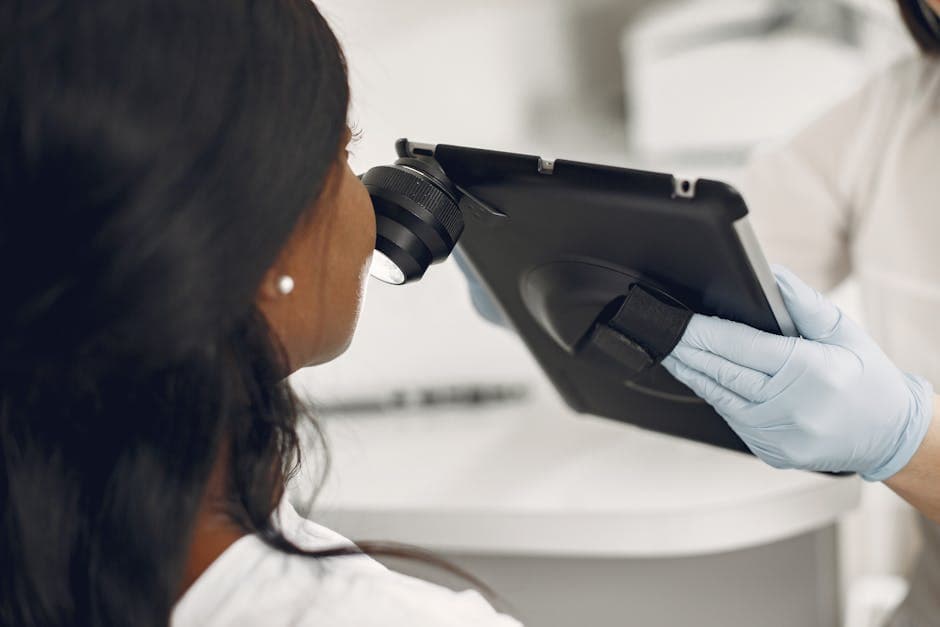
Our clinical team will greet you and review your history and vision. We start with non-invasive assessments that build a detailed picture of your eyes:
- Visual acuity and refraction: We check how clearly you see at distance and near, and whether a change in prescription improves clarity.
- Intraocular pressure (IOP): A quick measurement to screen for glaucoma risk.
- Ocular surface evaluation: Dry eye or blepharitis can blur vision and affect surgical measurements; if needed, we plan treatment to optimise the eye’s surface before surgery.
- Cataract imaging and measurements (biometry): Using optical biometry (for example, IOLMaster or Lenstar), we measure the eye’s length and corneal curvature. These data are used in modern formulae (such as Barrett Universal II) to calculate the most suitable intraocular lens (IOL) power for your goals.
- Corneal topography: A map of your cornea that helps us detect astigmatism and determine whether a toric lens may benefit you.
- Macular and retinal scans (as indicated): Optical coherence tomography (OCT) can reveal subtle macular issues, such as early macular degeneration or epiretinal membrane, which may influence lens choice and expected outcomes.
Pupil dilation and comprehensive eye examination
We typically use dilating drops to widen your pupils so Miss Khanam can thoroughly examine the lens and the back of the eye (retina and optic nerve). Dilation may cause light sensitivity and blurred near vision for four to six hours—bring sunglasses and arrange not to drive.
During the examination, Miss Khanam will:
- Assess the cataract’s type and density and how this relates to your symptoms (glare, halos, difficulty in low light, faded colours).
- Check the cornea, iris, and anterior chamber for signs of inflammation, previous surgery, or narrow angles.
- Evaluate the retina and macula to ensure there are no untreated conditions that could limit visual improvement after surgery.
Your goals and the personalised plan
Modern cataract surgery is as much about customising vision as it is about clearing a cloudy lens. We invite you to share your daily visual needs—driving at night, computer work, reading, sports—and any hobbies that demand crisp focus. Together, we discuss target refraction (for example, clear distance in both eyes, monovision, or blended vision) and how this aligns with your lifestyle.
We will also talk through lens choices:
- Monofocal IOLs: Provide a single focal point, typically set for distance. Glasses are usually needed for reading; night-time quality is excellent for many patients.
- Toric IOLs: Correct corneal astigmatism to sharpen clarity at the chosen focal distance.
- Extended depth-of-focus (EDOF) and multifocal IOLs: Offer a greater range of vision with reduced dependence on glasses. Some patients may notice halos or glare, particularly at night; careful selection and counselling are key.
If you have a history of laser vision correction, significant astigmatism, macular disease, or dry eye, we will explain how these factors can influence lens selection and expected results. Our aim is to agree a plan that fits your eyes and your life, not a one-size-fits-all approach.
Understanding benefits, risks, and consent
Cataract surgery generally offers a high likelihood of improved visual clarity and reduced glare, with rapid recovery for most people. However, all surgery carries risks. At your consultation we provide balanced, evidence-based information so you can make a fully informed decision.
Potential risks and side effects include:
- Infection and inflammation: Serious infection (endophthalmitis) is uncommon but can threaten vision; we use antiseptic preparation and antibiotics to minimise risk.
- Cystoid macular oedema: Usually treatable with drops; more likely in certain conditions such as diabetes.
- Retinal detachment: Rare overall; risk is higher in very short- or long-sighted eyes and after certain retinal conditions.
- Residual refractive error: You might still need glasses or a minor enhancement (rare) if the eye heals differently than predicted.
- Posterior capsular opacification (PCO): A common, delayed clouding behind the implant that can be treated with a quick outpatient laser (YAG capsulotomy) if needed.
- Visual phenomena with some lenses: Halos or glare may occur, particularly with multifocal/EDOF designs.
We will also discuss anaesthesia (typically local with numbing drops and, if appropriate, light sedation), what to expect on the day, and how we keep you comfortable throughout.
Medication review and safety planning
Please tell us about all medicines and supplements, including blood thinners and prostate medications such as tamsulosin (which can affect the iris during surgery). In most cases, regular medications are continued, but we coordinate closely with your GP or specialist when needed. If we identify eyelid or surface issues (for example, blepharitis), we may recommend a short course of treatment before surgery to reduce infection risk and improve visual quality after the operation.
What happens after the consultation?
You will leave with a clear summary of findings, lens options discussed, and our personalised recommendation. If you choose to proceed, our team will offer proposed dates at Harley Street or, if more convenient, at Spire St Anthony’s (Worcester Park) or Spire Gatwick. We will also provide pre-operative instructions and a simple timeline of your recovery and follow-up visits.
Common next steps include:
- Scheduling surgery: Usually as a day-case procedure. The second eye is often planned once the first has stabilised, though simultaneous surgery may be considered in select cases after thorough counselling.
- Pre-op optimisation: Treating dry eye or eyelid inflammation if present; this helps the accuracy of lens calculations and postoperative comfort.
- Practical planning: Arranging transport for surgery day and the first follow-up. Most people return to light activities within a couple of days; your surgeon will advise on individual timelines.
Answers to common worries
Will I be able to drive after the consultation?
No. Dilation blurs vision temporarily. Please arrange alternative transport.
Does the consultation hurt?
No. Tests are non-invasive. Dilating drops can cause brief stinging and light sensitivity, but this settles.
How accurate are the lens measurements?
We use state-of-the-art optical biometry and validated formulae. While no calculation is perfect, optimising the ocular surface and using multiple measurements helps achieve the planned result.
Can I choose to reduce my dependence on glasses?
Often, yes. Options include toric lenses for astigmatism and EDOF or multifocal designs to extend focus. We will explain trade-offs such as night-time halos and help you decide what best suits your priorities.
Why choose K Vision Centre on Harley Street?
Our practice focuses on individualised care backed by extensive clinical experience in cataract, corneal, and anterior segment conditions. Miss Tina Khanam—FRCOphth, MBBS, BSc(Hons)—has dedicated fellowship training in cataract and corneal surgery. We combine meticulous diagnostics with clear, compassionate communication so you always understand your choices and feel supported before, during, and after surgery.
Your next step
If cataracts are affecting your daily life—night driving, reading, or enjoying colours—book a cataract consultation with K Vision Centre. We will listen to your goals, perform a thorough assessment, and guide you through safe, modern options at our Harley Street clinic or at Spire St Anthony’s (Worcester Park) and Spire Gatwick. To get started, contact our team today.
Written by
Miss Tina Khanam
Consultant Ophthalmic Surgeon at K Vision Centre
Learn more about Miss Tina KhanamHave Questions About This Topic?
Book a consultation with Miss Tina Khanam to discuss your concerns and explore your options.
Speak With Miss KhanamRelated Articles
Continue exploring our expert insights on eye health

The Emotional Toll of Living with Presbyopia (needing reading glasses)
Presbyopia can turn daily life into a constant struggle with reading glasses. Explore the frustrations and learn about alternatives for visual freedom.

Laser Eye Surgery vs Lens Replacement: Find Your Best Option
Wondering whether laser eye surgery or lens replacement is right for you? This empathetic guide explains who each option suits, benefits and risks, and how our consultant-led assessment helps you decide.

How to Find the Right Eye Surgeon on Harley Street
Choosing an eye surgeon can feel daunting—especially on Harley Street, where options abound. This empathetic guide explains the qualifications, questions, risks, and aftercare to consider, and how K Vision Centre supports you at every step.